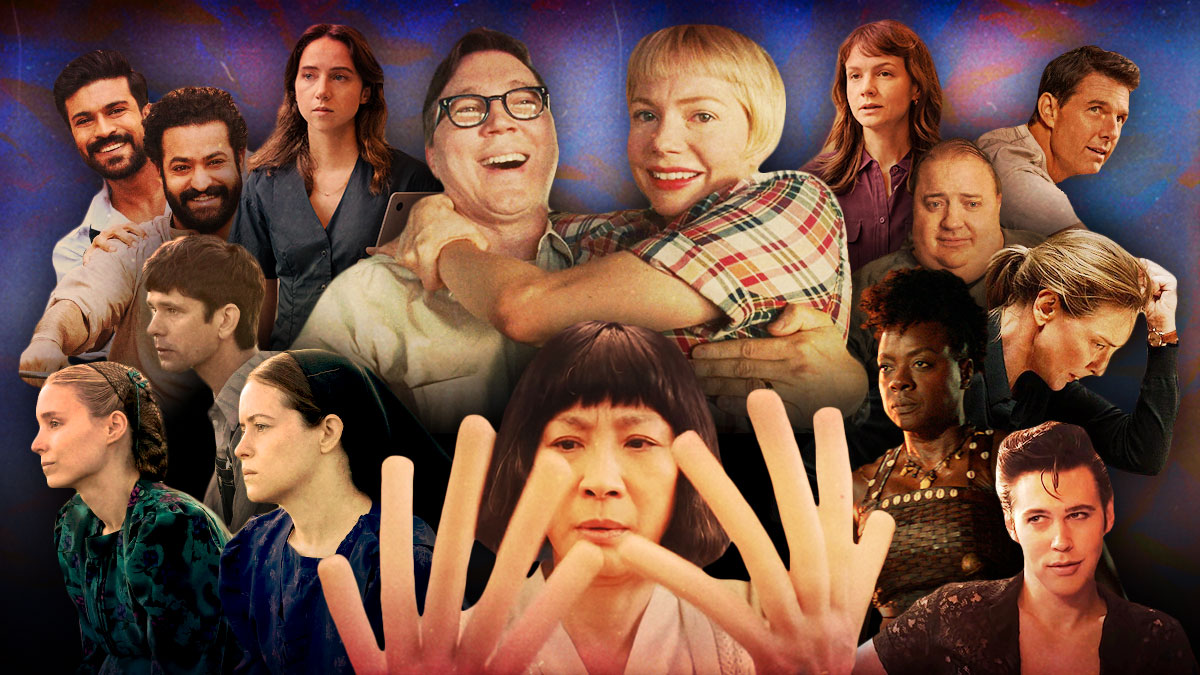
Oscars 2026 – Thoughts & Predictions

Blah blah blah, awards are silly, but here are my annual Oscar thoughts that I have taken far too seriously. (2025, 20242023202220212020201920182017201620152014). The most interesting and competitive Oscar year in memory! This is very undercooked and last minute.

Best Picture

Will win: One Battle After Another
Could win: Sinners
Should win: Marty Supreme

Best Director

Will win: Paul Thomas Anderson, One Battle After Another
Could win: Ryan Cogler, Sinners
Should win: Paul Thomas Anderson, One Battle After Another

Best Actress

Will win: Jesse Buckley, Hamnet

Best Actor

Will win: Michel B Jordan, Sinners
Could win: Timothee Chamalet, Marty Supreme

Best Supporting Actress

Will win: Amy Madagen, Weapons
Could win: Wumni Mosaku, Sinners

Best Supporting Actor

Will win: Sean Penn, One Battle After Another
Could win: Delroy Lindo, Sinners

Best Original Screenplay

Will win: Sinners

Best Adapted Screenplay

Will win: One Battle After Another

Best International Picture

Will win: Sentimental Value
Could win: The Secret Agent

Best Documentary Feature

Will win: Perfect Neighbour
Could win: Mr Nobody Against Putin

Best Animated Feature

Will win: K-Pop Demon Hunters
Could win: Zootopia 2

Best Cinematography

Will win: One Battle After Another
Could win: Sinners

Best Editing

Will win: One Battle After Another
Could win: F1

Best Production Design

Will win: Frankenstein
Could win: Sinners

Best Costume Design

Will win: Frankenstein
Could win: Sinners

Best Casting

Will win: Sinners
Could win: One Battle After Another
Should win: Marty Supreme

Best Make-Up & Hair

Will win: Frankenstein

Best Score

Will win: Sinners
Could win: One Battle After Another

Best Original Song

Will win: ‘Golden’ K-Pop Demon Hunters
Could win: ‘I Would Lie to You’ Sinners

Best Visual Effects

Will win: Avatar: Fire and Ash
Could win: Sinners

Best Sound

Will win: F1
Could win: Sinners

Best Live Action Short

Will win: “A Friend of Dorothy”
Could win: “Two People Exchanging Saliva”

Best Animation Short

Will win: “Retirement Plan”
Could win: “Butterfly”

Best Documentary Short

Will win: “All the Empty Rooms”

Oscars 2025 – Thoughts & Predictions

Blah blah blah, awards are silly, but here are my annual Oscar thoughts that I have taken far too seriously. (2024, 2023, 2022, 20212020201920182017201620152014). This year feels unpredictable in a way where the precursors have suggested a clear front runner in all categories, but in second place in 80% of categories is something that is so close you couldn’t really call it an upset. Expecting a low success rate this year.

Best Picture

Will win: Anora
Could win: Conclave
Should win: Nickel Boys
If only… I Saw the TV Glow

I had an early pick that I only just gave up at the end of the Oscar season. I really thought A Complete Unknown would surge as a consensus option. But there just aren’t any signs of that happening – Conclave remains the mainstream option, and Anora the critical darling that keeps winning. My ballot would read: Nickel Boys, I’m Still Here, The Substance, A Complete Unknown, The Brutalist, Anora, Dune: Part Two, Conclave, Wicked and Emilia Pérez.

Best Director

Will win: Sean Baker, Anora
Could win: Brady Corbet, The Brutalist
Should win: Coralie Fargeat, The Substance
If only… Megan Park (My Old Ass), Rose Glass (Love Lies Bleeding), Jane Schoenbrun (I Saw the TV Glow) & Payal Kapadia (All We Imagine As Light)

Best Actress

Will win: Demi Moore, The Substance
Could win: Mikey Madison, Anora
Should win: Fernanda Torres, I’m Still Here
If only… Nicole Kidman, Babygirl

Best Actor

Will win: Adrien Brody, The Brutalist
Could win: Timothée Chalamet, A Complete Unknown
Should win: Timothée Chalamet, A Complete Unknown
If only… Daniel Craig, Queer

Best Supporting Actress

Will win: Zoe Saldaña, Emilia Pérez
Could win: Ariana Grande, Wicked
Should win: Ariana Grande, Wicked
If only… Danielle Deadwyler, The Piano Lesson

Best Supporting Actor

Will win: Kieran Culkin, A Real Pain
Could win: Edward Norton, A Complete Unknown
Should win: Guy Pearce, The Brutalist
If only… Clarence Maclin, Sing Sing

Best Original Screenplay

Will win: Anora
Could win: A Real Pain
Should win: A Real Pain
If only… A Different Man

Best Adapted Screenplay

Will win: Conclave
Could win: A Complete Unknown
Should win: Nickel Boys
If only… Queer

Best International Picture

Will win: I’m Still Here
Could win: Emilia Perez
Should win: I’m Still Here
If only… Kneecap

Best Documentary Feature

Will win: No Other Land
Could win: Porcelain War
Should win: No Other Land
If only… Daughters

Best Animated Feature

Will win: The Wild Robot
Could win: Flow
Should win: Flow
If only… That Christmas

Best Cinematography

Will win: The Brutalist
Could win: Nosferatu
Should win: The Brutalist
If only… Nickel Boys

Best Editing

Will win: Conclave
Could win: Anora
Should win: Conclave
If only… Soundtrack to a Coup d’Etat

Best Production Design

Will win: Wicked
Could win: The Brutalist
Should win: Dune: Part Two
If only… Blitz

Best Costume Design

Will win: Wicked
Could win: Nosferatu
Should win: Nosferatu
If only… Furiosa: A Mad Max Saga

Best Make-Up & Hair

Will win: The Substance
Could win: Wicked
Should win: The Substance
If only… Dune: Part Two

Best Score

Will win: The Brutalist
Could win: Conclave
Should win: The Wild Robot
If only… Challengers

Best Original Song

Will win: “El Mal” Emilia Pérez
Could win: “The Journey” The Six Triple Eight
Should win: Abstain
If only… “Harper And Will Go West” Will & Harper

Best Visual Effects

Will win: Dune: Part Two
Could win: Kingdom of the Planet of the Apes
Should win: Better Man
If only… Civil War

Best Sound

Will win: Dune: Part Two
Could win: A Complete Unknown
Should win: A Complete Unknown
If only… Saturday Night

Best Live Action Short

Will win: “Anuja”
Could win: “The Man Who Could Not Remain Silent”

Best Animation Short

Will win: “Yuck!”
Could win: “Beautiful Men”

Best Documentary Short

Will win: “Incident”
Could win: “I Am Ready, Warden”
Should win: “The Only Girl in the Orchestra”

Oscars 2024 – Thoughts & Predictions

In what seems to be the only remaining reason I use this blog – here’s my annual Oscar thoughts (2023, 2022, 20212020201920182017201620152014). As usual: awards are silly – now let’s take them really seriously.

Best Picture

Will win: Oppenheimer
Could win: The Holdovers
Should win: Anatomy of a Fall
If only… All of Us Strangers

I have a raised eyebrow every time I came across a critic or commentator referring to 2023 as a stellar year in film. There are certainly some highlights, but if these are the ten films that represent the year I’m pretty unimpressed. My ballot would read: Anatomy of a Fall, Killers of a Flower Moon, Poor Things, Past Lives, Oppenheimer, Barbie, American Fiction, The Holdovers, and Maestro. I’ve left The Zone of Interest out because after one viewing I’ve got such complicated feelings about I don’t know how to include it in a ranked ballot. Overall, I have thoughts about all these films and there perhaps only Anatomy of a Fall that I have unbridled passion for … but even then…

Best Director

Will win: Christopher Nolan (Oppenheimer)
Could win: Yorgos Lanthimos (Poor Things)
Should win: Justine Triet (Anatomy of a Fall)
If only… Greta Gerwig (Barbie), Celine Song (Past Lives), A.V. Rockwell (A Thousand and One) or Kelly Fremon Craig (Are You There God? It’s Me Margaret)

Best Actress

Will win: Lily Gladstone (Killers of the Flower Moon)
Could win: Emma Stone (Poor Things)
Should win: Sandra Huller (Anatomy of a Fall)
If only… Natalie Portman (May December) or Julia Louis Dreyfus (You Hurt My Feelings)

Best Actor

Will win: Cillian Murphy (Oppenheimer)
Could win: Paul Giamatti (The Holdovers)
Should win: Jeffrey Wright (American Fiction)
If only… Andrew Scott (All of Us Strangers)

Best Supporting Actress

Will win: Da’Vine Joy Randolph (The Holdovers)
Could win: Emily Blunt (Oppenheimer)
Should win: Da’Vine Joy Randolph (The Holdovers)
If only… Julianne Moore (May December)

Best Supporting Actor

Will win: Robert Downey Jr. (Oppenheimer)
Could win: Ryan Gosling (Barbie)
Should win: Mark Ruffalo (Poor Things)
If only… Paul Mescal (All of Us Strangers)

Best Original Screenplay

Will win: Anatomy of a Fall
Could win: The Holdovers
Should win: May December
If only… You Hurt My Feelings

Best Adapted Screenplay

Will win: American Fiction
Could win: Barbie
Should win: Barbie
If only…  All of Us Strangers

Best International Picture

Will win: Zone of Interest
Could win: Society of the Snow
Should win: Perfect Days
If only… Fallen Leaves

Best Documentary Feature

Will win: 20 Days in Mariupol
Could win: Four Daughters
Should win: 20 Days in Mariupol
If only… Menus-Plaisirs – Les Troisgros

Best Animated Feature

Will win: Spider-Man: Across the Spider-Verse
Could win: The Boy and the Heron
Should win: The Boy and the Heron
If only… Teenage Mutant Ninja Turtles: Mutant Mayhem

Best Cinematography

Will win: Oppenheimer
Could win: Killers of the Flower Moon
Should win: El Conde
If only… Saltburn

Best Editing

Will win: Oppenheimer
Could win: Anatomy of a Fall
Should win: Anatomy of a Fall
If only… Passages

Best Production Design

Will win: Poor Things
Could win: Barbie
Should win: Poor Things
If only… Asteroid City

Best Costume Design

Will win: Barbie
Could win: Poor Things
Should win: Poor Things
If only… Wonka

Best Make-Up & Hair

Will win: Maestro
Could win: Poor Things
Should win: Poor Things
If only… Priscilla

Best Score

Will win: Oppenheimer
Could win: Killers of the Flower Moon
Should win: Oppenheimer
If only… Past Lives

Best Original Song

Will win: “What Was I Made For?” Barbie
Could win: “I’m Just Ken” Barbie
Should win: “What Was I Made For?” Barbie
If only… “Peaches” The Super Mario Bros

Best Visual Effects

Will win: Godzilla Minus One
Could win: The Creator
Should win: The Creator
If only… 

Best Sound

Will win: Zone of Interest
Could win: Oppenheimer
Should win: Zone of Interest
If only… Ferrari

Best Live Action Short

Will win: ‘The Wonderful Story of Henry Sugar’
Could win: ‘The After’

Best Animation Short

Will win: ‘WAR IS OVER! Inspired by the Music of John and Yoko’
Could win: ‘Letter to a Pig’

Best Documentary Short

Will win: ‘The ABCs of Book Banning’
Could win: ‘The Last Repair Shop’

Oscars 2023 – Thoughts & Predictions

In what seems to be the only remaining reason I use this blog – here’s my annual Oscar thoughts (2022, 20212020201920182017201620152014). As usual: awards are silly – now let’s take them really seriously.

Weird year to predict winners. The majority of categories have two potential winners. Suspect I’ll end up with 66% success with 100% if I could swap in my second place. So many close calls.

Best Picture

Will win: Everything Everywhere All At Once
Could win: Banshees of Inisherin
Should win: Everything Everywhere All At Once
If only… Aftersun

A return to an exciting set of nominations. My ballot would read: Everything Everywhere All at Once, Banshees of Inisherin, Tár, Women Talking, The Fabelmans, Triangle of Sadness, All Quiet on the Western Front, Avatar: The Way of Water, Top Gun: Maverick, Elvis. Would love to live in a world where I could add films like Aftersun, Bones And All, & The Northman and any of the documentaries that have been in the conversation this year.

Best Director

Will win: Daniels (Everywhere Everything All At Once)
Could win: Steven Spielberg (The Fabelmans)
Should win: Todd Field (TAR)
If only… Sarah Polley (Women Talking)

Best Actress

Will win: Cate Blanchett (TAR)
Could win: Michelle Yeoh (Everything Everywhere All At Once)
Should win: Michelle Yeoh (Everything Everywhere All At Once)
If only… Viola Davis (The Woman King)

Best Actor

Will win: Austin Butler (Elvis)
Could win: Brendon Fraser (The Whale)
Should win: Colin Farrell (Banshees of Inisherin)
If only… Timothee Chamalet (Bones & All)

Best Supporting Actress

Will win: Jamie Lee Curtis (Everything Everywhere All At Once)
Could win: Angela Bassett (Black Panther: Wakanda Forever)
Should win: Kerry Condon (Banshees of Inisherin)
If only… Janelle Monáe (Glass Onion: A Knives Out Mystery)

Legacy Oscar for Bassett? I think anti-Marvel bias will play out here. Or a Jamie Lee Curtis cheerleader Oscar for her work getting EEAAO to this level of recognition? She’s good and a lot of people in the academy who are part of the nepotism machine will vote for her. A shame as Kerry Condon’s work in Banshees is outstanding. Hoping she comes through if the two EEAAO nominees split the vote.

Best Supporting Actor

Will win: Ke Huy Quan (Everything Everywhere All At Once)
Could win: Brendan Gleeson (Banshees of Inisherin)
Should win: Ke Huy Quan (Everything Everywhere All At Once)
If only… Pedro Pascal (The Unbearable Weight of Massive Talent)

Best Original Screenplay

Will win: Everything Everywhere All At Once
Could win: Banshees of Inisherin 
Should win: Banshees of Inisherin
If only… Aftersun

Best Adapted Screenplay

Will win: Women Talking
Could win: All Quiet on the Western Front
Should win: Women Talking
If only…  The Wonder

Best International Picture

Will win: All Quiet on the Western Front
Could win: Argentina, 1985
Should win: The Quiet Girl
If only… Corsage

Best Documentary Feature

Will win: Navalny
Could win: Fire of Love
Should win: All That Breathes
If only… Moonage Daydream

This win is similar to ‘My Octopus Teacher’. The greatest filmmaking on display here is ‘All That Breathes’ – sad to see this category has gone a bit more populist in recent years.

Best Animated Feature

Will win: Guillermo del Toro’s Pinocchio
Could win: Marcel the Shell with Shoes On 
Should win: Marcel the Shell with Shoes On 
If only… The Bad Guys

Best Cinematography

Will win: All Quiet on the Western Front
Could win: Elvis
Should win: TAR
If only… Athena

Best Editing

Will win: Everything Everywhere All At Once
Could win: Top Gun: Maverick
Should win: Everything Everywhere All At Once
If only… Aftersun

Best Production Design

Will win: Elvis
Could win: Babylon
Should win: Babylon
If only… After Yang

Best Costume Design

Will win: Elvis
Could win: Black Panther: Wakanda Forever
Should win: Babylon
If only… Corsage

Best Make-Up & Hair

Will win: Elvis
Could win: The Whale
Should win: Black Panther: Wakanda Forever
If only… Blonde

Dismayed that this category continues to reward fat suits. This category is fast becoming a joke. Make up artists and hair stylists deserve better.

Best Score

Will win: Babylon
Could win: All Quiet on the Western Front
Should win: Babylon
If only… The Wonder

Best Original Song

Will win: “Naatu Naatu” RRR
Could win: “Lift Me Up” Black Panther: Wakanda Forever
Should win: “This is a Life” Everything Everywhere All At Once
If only… “New Body Rumba” White Noise

Best Visual Effects

Will win: Avatar: The Way of Water
Could win: Top Gun: Maverick
Should win: Avatar: The Way of Water
If only… Everything Everywhere All At Once 

Best Sound

Will win: Top Gun: Maverick
Could win: All Quiet on the Western Front
Should win: Avatar: The Way of Water
If only… Thirteen Lives

Best Live Action Short

Will win: ‘Le Pupille’
Could win: ‘An Irish Goodbye’

Best Animation Short

Will win: ‘The Boy, the Mole, the Fox and the Horse’
Could win: ‘My Year of Dicks’

Have seen four of these films and An Ostrich Told Me the World Is Fake and I Think I Believe It’ is exceptional. Love that film. Dismayed it hasn’t been picked up in more chatter and hence not predicting it.

Best Documentary Short

Will win: ‘Stranger At the Gate’
Could win: ‘The Elephant Whisperers’

‘Haulout’ is the best film in this bunch. ‘Stranger at the Gate’ is a terrible film. It reduces a complex issue into a one flavour lollypop, and I’m convinced the Academy will suck on it.

Oscars 2022 – Thoughts & Predictions

The Oscars increasingly function in a weird space in the film world, and yet here I am giving it oxygen (2021, 2020201920182017201620152014). As usual: awards are silly – they mean nothing – now let’s get on with over-analysing them.

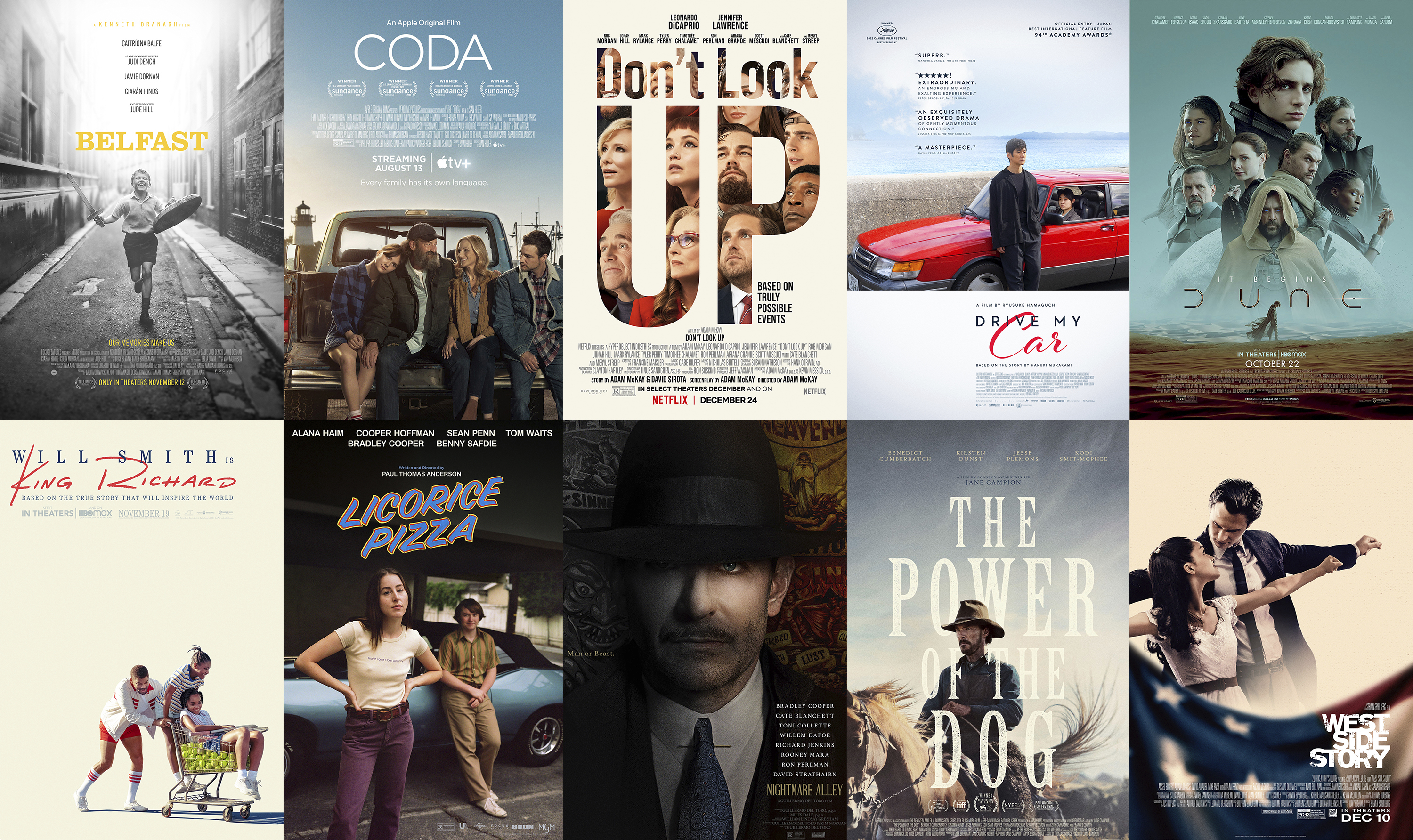
Best Picture

Will win: CODA
Could win: Power of the Dog
Should win: Drive My Car
If only… The Green Knight

Contender along with 2019 for the most disappointing best picture races in the past decade. My ballot would read: Drive My Car, The Power of the Dog, West Side Story, Dune, Licorice Pizza, CODA, King Richard, Nightmare Alley, Belfast. Would love to live in a world where I could add films like Titane, Annette, The Green Knight, Petit Maman, Shiva Baby, Zola, The Harder They Fall, Pig and any of the documentaries that have been in the conversation this year. I’ve succumbed to the populist pressure to consider CODA the front runner, but I would be far happier to be wrong and see The Power of the Dog crowned at the end of the night.

Best Director

Will win: Jane Campion (Power of the Dog)
Could win: Kenneth Branagh (Belfast)
Should win: Jane Campion (Power of the Dog)
If only… Maggie Gyllenhall (The Lost Daughter) / Julia Decournou (Titane)

Best Actress

Will win: Jessica Chastain (The Eyes of Tammy Faye)
Could win: Olivia Coleman (The Lost Daughter)
Should win: Penelope Cruz (Parallel Mothers)
If only… Alan Haim (Licorice Pizza)

Best Actor

Will win: Will Smith (King Richard)
Could win: Benedict Cumberbatch (The Power of the Dog)
Should win: Andrew Garfield (Tick, Tick… Boom)
If only… Stephen Graham (Boiling Point) / Nicholas Cage (Pig)

No performance here has got me terribly excited this year. Picking Garfield as should win is a stretch.

Best Supporting Actress

Will win: Ariana Debose (West Side Story)
Could win: Kirsten Dunst (The Power of the Dog)
Should win: Kirsten Dunst (The Power of the Dog)
If only… Ann Dowd (Mass) / Ruth Negga (Passing)

Ariana kills it in West Side Story and is thoroughly deserving, but if pushed it is Dunst who I’d prefer to take the honours this year.

Best Supporting Actor

Will win: Troy Kotsur (CODA)
Could win: Kodi Smit-McPhee (The Power of the Dog)
Should win: Kodi Smit-McPhee (The Power of the Dog)
If only… Jason Issacs (Mass)

Best Original Screenplay

Will win: Licorice Pizza
Could win: Belfast
Should win: The Worst Person in the World
If only… Parallel Mothers / Petit Maman

Could easily be Belfast. Either way the Academy will be awarding Branagh or Anderson – both who are seen as overdue for Oscar recognition.

Best Adapted Screenplay

Will win: CODA
Could win: The Power of the Dog
Should win: The Power of the Dog
If only…  The Green Knight

Here’s the first CODA upset. The late surge in support for the crowd pleaser is more likely to pay off here than in Best Picture, but it’s possible it will take home three Oscars from its three nominations.

Best International Picture

Will win: Drive My Car
Could win: The Worst Person in the World
Should win: Drive My Car
If only… Great Freedom

Best Documentary Feature

Will win: Summer of Soul (Or, When The Revolution Could Not Be Televised)
Could win: Flee
Should win: Summer of Soul (Or, When The Revolution Could Not Be Televised)
If only… The Velvet Underground

Incredibly strong line up for documentaries. Time to start talking about expanding this category. There are stronger documentaries in the shortlist that were not nominated than there were in the best picture films that were nominated.

Best Animated Feature

Will win: Encanto
Could win: The Mitchells vs. The Machines
Should win: Flee
If only… Cryptozoo

The Mitchells Vs The Machines should be taking this out, but unfortunately the inferior film has this thing about Bruno.

Best Cinematography

Will win: The Power of the Dog
Could win: Dune
Should win: The Power of the Dog
If only… The Green Knight / The French Dispatch / The Harder They Fall

I’m picking an upset here against the tide. While other categories like picture, screenplay and supporting actor have lost momentum for The Power of the Dog, I’m picking here that this might lead to a reverse tide for a technical catoegry or two which will still be dominated by Dune. This will also be the first female to win cinematography; Ari Wegner is deserving for the outstanding work on TPOTD.

Best Editing

Will win: Dune
Could win: King Richard
Should win: Tick, Tick…Boom!
If only… Summer of Soul (Or, When The Revolution Could Not Be Televised)

Another technical category where Dune could be dethroned. Would not be surprised to see King Richard here.

Best Production Design

Will win: Dune
Could win: Nightmare Alley
Should win: West Side Story
If only… The French Dispatch

Best Costume Design

Will win: Cruella
Could win: Dune
Should win: Cruella
If only… Spencer

Best Make-Up & Hair

Will win: The Eyes of Tammy Faye
Could win: Dune
Should win: Coming 2 America
If only… Cyrano

Best Score

Will win: Dune
Could win: The Power of the Dog
Should win: Parallel Mothers
If only… The Lost Daughter

Best Original Song

Will win: No Time to Die” – No Time to Die
Could win: “Dos Oruguitas” – Encanto
Should win: “No Time to Die” – No Time to Die
If only… “So May We Start” – Annette

Lin Manuel Miranda won’t have to wait too long for his EGOT, but I don’t think it will be this year. This year’s Bond song has been around for ages, but lots of people saw that film and the power of the song dropping in context after the pre-credits sequence is undeniable.

Best Visual Effects

Will win: Dune
Could win: Spider-Man: No Way Home
Should win: Dune
If only… The Matrix Resurrections

Best Sound

Will win: Dune
Could win: West Side Story
Should win: Dune
If only… The Harder They Fall

Best Live Action Short

Will win: ‘The Long Goodbye’
Could win: ‘Ala Kachuu: Take and Run’

Best Animation Short

Will win: ‘Robin Robin’
Could win: ‘The Windshield Wiper’

Best Documentary Short

Will win: ‘The Queen of Basketball’
Could win: ‘Audible’

Oscars 2021 – Thoughts & Predictions

Another traditional Oscars post (2020, 201920182017201620152014), with the usual disclaimer that awards are silly – they mean nothing – now let’s get on with over-analysing them. As my cynicism about the Oscars deepens, so does my interest in picking the award winners. It’s a dissonance I embrace with open arms.

Best Picture

Will win: Nomadland
Could win: Trial of the Chicago 7
Should win: Nomadland
If only… First Cow

Strong year for nominations. Despite the disruptions to cinemas and distribution there’s a really interesting mix of films here. I could do without a couple of the more conventional nominations, but ultimately the narratives around awards season has been centered around finding more space for lower budget and more artistically bold films. Preferential voting unlikely to create an upset here. My ballot would read (from 1 to 9): Nomadland, Minari, Promising Young Woman, Judas & The Black Messiah, Sound of Metal, The Father, Trial of the Chicago 7, Mank.

Best Director

Will win: Chloe Zhao (Nomadland)
Could win: David Fincher (Mank)
Should win: Chloe Zhao (Nomadland)
If only… Regina King (One Night in Miami)

In a just world, Chloe Zhao would have won for The Rider in 2017.

Best Actress

Will win: Carey Mulligan (Promising Young Woman)
Could win: Viola Davis (Ma Rainey’s Black Bottom)
Should win: Any
If only… Julia Garner (The Assistant) or Carrie Coon (The Nest)

Unbelievably strong category. All five performances carry their respective films. Viola winning would make it four people of colour sweeping the acting awards. This would be amazing but I think the surge in support for Viola has come too late, and that Carey Mulligan will take it. Would be very happy to be proven wrong.

Best Actor

Will win: Chadwick Boseman (Ma Rainey’s Black Bottom)
Could win: Anthony Hopkins (The Father)
Should win: Chadwick Boseman (Ma Rainey’s Black Bottom)
If only… Delroy Lindo (Da Five Bloods)

Best Supporting Actress

Will win: Yuh-Jung Youn (Minari)
Could win: Glenn Close (Hillbilly Elegy)
Should win: Maria Bakalova ( Borat Subsequent Moviefilm: Delivery of Prodigious Bribe to American Regime for Make Benefit Once Glorious Nation of Kazakhstan)
If only… Margo Martindale (Blow the Man Down)

Eager to see Maria Bakalova upset here just to really shake up the Academy and the tendency to overlook comedic performances. Yuh-Jung Youn’s acceptance speech will be a really hoot.

Best Supporting Actor

Will win: Daniel Kaluuya (Judas and the Black Messiah)
Could win: Paul Raci (Sound of Metal)
Should win: Paul Raci (Sound of Metal)
If only… Barry Keoghan (Calm With Horses)

Can’t get the issue of casting an older actor in the role of 21 year old Fred Hampton. Completely changes how you respond to that film so I find it difficult to get my head around awarding Kaluuya despite how outstanding his performance is. Maybe I’ll get there by Sunday night.

Best Original Screenplay

Will win: Promising Young Woman
Could win: Trial of the Chicago 7
Should win: Minari
If only… Never Rarely Sometimes Always

Really worried that Minari will leave largely unacknowledged despite being one of the year’s best and I though this was a category where the buzz might sound. Really looking forward to Alan Sorkin’s ‘poker face’ failing like it did at the Baftas.

Best Adapted Screenplay

Will win: Nomadland
Could win: The Father
Should win: One Night in Miami
If only… I’m Thinking of Ending Things

The least adapted of these is One Night in Miami, but I still believe it is one of the best scripts. This could be a The Father upset.

Best International Picture

Will win: Another Round
Could win: Quo Vadis, Aida?
Should win: Collective
If only… Beginning

Best Documentary Feature

Will win: My Octopus Teacher
Could win: Crip Camp
Should win: Time
If only… Dick Johnson is Dead

Incredibly strong line up for documentaries. Time to start talking about expanding this category. I’d argue there are stronger documentaries in the shortlist that were not nominated than there were in the best picture films that were nominated.

Best Animated Feature

Will win: Soul
Could win: Wolfwalkers
Should win: A Shaun the Sheep Movie: Farmageddon

Best Cinematography

Will win: Nomadland
Could win: Mank
Should win: News of the World
If only… The Forty-Year Old Version / The Vast of Night / The Truffle Hunters

Best Editing

Will win: The Trial of the Chicago 7
Could win: Sound of Metal
Should win: Nomadland
If only… Time

Best Production Design

Will win: Mank
Could win: Ma Rainey’s Black Bottom
Should win: The Father
If only… Sylvie’s Love

Best Costume Design

Will win: Ma Rainey’s Black Bottom
Could win: Emma
Should win:  Ma Rainey’s Black Bottom
If only… The Prom

Best Make-Up & Hair

Will win: Ma Rainey’s Black Bottom
Could win: Pinocchio
Should win: Ma Rainey’s Black Bottom
If only… Birds of Prey and the Fantabulous Emancipation of One Harley Quinn

Best Score

Will win: Soul
Could win: Mank
Should win: Da 5 Bloods
If only… The Invisible Man

Best Original Song

Will win: “Speak Now” – One Night in Miami
Could win: “Io Si” – The Life Ahead
Should win:  “Speak Now” – One Night in Miami
If only… “Wuhan Flu” – Borat Subsequent Moviefilm: Delivery of Prodigious Bribe to American Regime for Make Benefit Once Glorious Nation of Kazakhstan

Best Visual Effects

Will win: Tenet
Could win: The Midnight Sky
Should win: The One And Only Ivan
If only… Welcome to Chechnya

Best Sound

Will win: Sound of Metal
Could win: Soul
Should win: Sound of Metal
If only… Saint Maud

Best Live Action Short

Will win: ‘Two Distant Strangers’
Could win: ‘The Letter Room’
If only… ‘The Human Voice’

Best Animation Short

Will win: ‘If Anything Happens I Love You’
Could win: ‘Genius Loci’

Best Documentary Short

Will win: ‘A Love Song for Latasha’
Could win: ‘A Concerto Is a Conversation’

BFI Flare LGBTIQ+ Film Festival 2021

I’ve been challenged recently by my partner’s decision to stop watching films where straight people play queer characters. It is a stand that I feel uncomfortable with taking, but I can understand the reasons for arriving at it. I genuinely feel the need to contribute support to queer film as the situation of regular production of films with queer themes or story lines feels so precarious that any box office failure might destroy the potential production of countless upcoming titles. However, beneath this conversation happening in the ‘mainstream’ there is a regular production of queer non-conforming films challenging heteronormativity where the straight white cis-male voice isn’t naturalised or assumed. The distribution of these films is more complex making them less accessible, which is where BFI Flare comes in. The festival makes it possible to engage with this non-hegemonic cinema. It’s a special opportunity to see my LGBTIQ+ community reflected on the silver screen that I don’t take for granted.

From the shorts I just wanted to highlight ‘The Night Train (Nattåget)‘ which was a Swedish meet cute told in the most sensual camerawork, intently capturing the power of the ‘love-at-first-site’ gaze. A more unfamiliar concept was explored in ‘Listening In (HaMaazin)‘ which featured a solider spying on a Palestinian gay couple. Both films demanded nuanced performers from their young leads and I found both to be incredibly affecting. Lastly, I also would like to shout out ‘Is It Me‘ for being a documentary short with some unforgettable imagery – an example of aesthetics that really ground the ideological questions of the film and the subject.

I found conventional storytelling in some of the features: Cowboys, Firebird, Dramarama, Boy Meets Boy, & Jump Darling all found their skeletons in the genres of coming of age and romance, – but each contained meaningful contributions to challenge the conventional gaze and language of cinema. I particularly found Dramarama effective for challenging the usual coming out narrative, subverting expectations with an absorbing third act. I should acknowledge my bias for this film, as it appears aspects were lifted directly from my life. There was nothing conventional about Enfant Terrible, which was a bold theatrical re-visioning of the biopic. Fassbinder is someone I’ve admired through his films, but this was a challenging expose of the way in the high status of male auteurs is often assumed without question. There is cross over here with the position of the straight white male, but it is the unapologetic gayness of the Fassbinder’s world that disrupts this conventional narrative.

The historical perspective of documentaries Rebel Dykes and Cured were very valuable insights into new areas of queer history for me. A more provocative watch was I Am Samuel, capturing the relationship of a gay Kenyan couple. Captured over five years in an observational style, the men navigate the complexities of their identity in both rural Kenya and the comparative urban freedom of Nairobi. It is a portrayal that manages to lay bare the difficulties of the context, but also has a heartwarming side to it as the relationship at the heart of the film comes across as pure and loving as anything I’ve seen in recent cinema.

The last two films I wanted to draw attention to were Rurangi and Colours of Tobi. Their challenge to the cisnormative portrayals of trans* identities was applauded by this piece by Thomas Flew. The article finishes by stating: “The films are here, and trans and gender non-conforming audiences are already watching and loving them. It’s time for cis audiences to start watching too.” It makes an important case for why films need to be made by the people they are about. These are authentic stories that deserve wide and diverse audiences. The Flare Festival is such an important space to provide starting points for these products, but the structure of the industry must find ways to help these diverse products progress from the periphery and find meaningful engagement with mainstream audiences. In a perfect world this might help prevent films like The Danish Girl and Dallas Buyers Club perpetuating problematic dominant narratives. In Flew’s words: “Until mainstream cinema can portray trans characters without obsessing over their genitals, the multiplex won’t be a safe or welcoming place for trans audiences.”

Carol Clover – The Formulaic Approach to Genre

The Hollywood slasher horror is unique in the sense that its arcane appeal has transcended its repetitiveness for three decades, arguably more. However today the slasher is less visible, and has left only formulaic conventions that have survived in genres derived from horror, such as the psychological serial killer genre, the violence as action horror and the post-modern, self-conscious slasher. The formulaic approach is pertinent to all these forms, which, in a way, effectively confirm the integrity of the formulaic approach by its ability to transcend genre evolution. The classic slasher has declined for three primary reasons; technological advancements have reframed what we think of as horror, the ideology of horror is no longer as relevant, and the limitations of genre itself.

The classic slasher period between 1974 and 1986 (Clover 1996, 75), book ended by The Texas Chainsaw (Hooper, 1974) and its sequel, The Texas Chainsaw Massacre 2 (Hooper, 1986), created and reinforced the slasher horror’s adherence to formula. Laura Wyrick credits this period as when the “horror film became both increasingly popular and well-defined, more and more separate from its sister genre and predecessor, the psychological thriller” (1998, 122). Carol Clover, in her influential essay “Her Body, Himself: Gender in the Slasher Film”, outlined the formulaic conventions of the slasher horror, citing conventions in accordance with the following five categories: killer, locale, weapons, victims, and shock effects (1996, 75). By the 90s, primarily due to the work of Wes Craven (Simpson 2002, 277), the slasher had moved away from adherence of conventions, towards a post-modern form of observation. The classical slasher is identifiable from its close affiliation with these formulaic conventions, and it is these conventions that have largely survived in one form or another through the decline and evolution of the genre.

While the apotheosis of the classical slasher is typically considered to be Halloween (Carpenter, 1978), Scream (Craven, 1996) represents an important landmark on the other side of the classic period. It embodies the movement from the classic horror to ironic, self-parodying horror films (Wyrick 1998, 123). Its historical impact is also grand. Steven Jay Schneider credits Scream with “kicking off a new wave of hip and reflexive slasher movies” (2003, 868); such films include Urban Legend (Blanks, 1998) I Know What You Did Last Summer (Gillespie, 1997) and Valentine (Blanks, 2001). Scream plays with a high level of intertextuality as its film literate killer’s act consciously within the conventions of a slasher film. Within this frame there are countless references to the context, such as the often-quoted opening scene where Casey is called by the killer, threatening to kill her and her boyfriend if she does not correctly answer horror trivia questions like, “who was the killer in Friday the 13th?”

Cinema as a form is constantly undergoing changes within its multiple levels of categories. Therefore it is no surprise that the classical slasher has declined. The period between 1986 and Scream in 1996 was not bereft of contributions, and attempts at the horror genre. In this period the serial killer horror emerged, deriving from the slasher and carrying some of its formulaic conventions, such as The Silence of the Lambs (Demme, 1990) (Tietchen 1998). Demme was not the only progressive filmmaker working in this period that attempted to revive, or re-establish the slasher. Tim Burton with his unique brand of fantasy filmmaker derived some of his techniques from horror, as did Clive Baker with Hellraiser (1987) and Candyman (Rose, 1992). However, with the exception of the serial killer narrative, none of these trends developed. It wasn’t until Scream, preceded by the analogous Wes Craven’s New Nightmare (Craven, 1994), that the slasher horror, in a new guise, was truly reinvigorated.

The development from Halloween to Scream was firstly a result of the changing technology, both in the advent of computer-generated imagery and in the further advancement of modern practical effects. The horror film has always been built on the idea of terror firstly in fantastical realms and then in domestic locales. The history of violence in horror films has paralleled this development; as the setting got closer to home, the violence tended to increase. Compare for example the difference between Ellen’s death in Nosferatu (Murnau, 1922), the shower scene in Psycho (Hitchcock, 1960) and any of the multiple murders in Friday the 13th (Cunningham, 1980). A clear progression can be seen from the off-screen violence of 1920s horror, suggestive visceral violence of the 1960s and the shock violence of the 1980s. This evolution can be read as a response to audience demand, but also as a chronicling of the technological capabilities of onscreen realism. This is particularly significant for horror where violence is a convention.

With the new explicit violence came a new tone (Clover, 87). The slasher genre became the natural repository for such graphic effects and over time violence became not so much the reason for viewers to look away, the violence became the excuse for the special effects. The slasher film became the home for “effects that may have been intended to disgust, but were just as much intended to fascinate” (Wyrick 122). This had a profound effect on the genre’s ability to generate tension and create terror. Suspense was superseded or incidental. Consider the use of violence as spanning the A Nightmare on Elm Street series; what began as a creepy, surreal take on the horror genre quickly digressed. Nightmare on Elm Street 5: The Dream Child (Hopkins, 1989) was a over the top effect filled disarray, where showy deaths defined the series as oppose to the monstrous villain with his unique means of disposal. In a sense a spin-off of this trend was self-parody, where a victim’s fate was composed to generate laughter as oppose to terror.

Another implication of this increased violence is that it has become more like art. This is best illustrated by the serial killer films, which “portrays murderers as semiotically informed bricoleurs who follow the outline of a pre-established narrative manifest in shared literature of images” (Tietchen 1998, 99). This idea is distinctly applicable for Scream where the killers are consciously working within the narrative conventions of a horror film in order to achieve their  goal. The scene in which Billy fakes his own death shows a heightened awareness of murder as art, as does the subsequent ‘fake’ wounding. Scream is as self aware of murder as art as it is of the idea of violence penetrating the domestic. Both involve a certain fear that is different to the classic horror. David Ehrlich argues that the increase in violence has changed the way we are scared by movies, “Gone is the pure dread of The Shining or the surreal suffocation of Onibaba”, instead he claims we are now at the mercy of, what he refers to as the “jump scare” – an unexpected arrival or use of violence (2006, 1).

The belief system that the slasher operates around is the second predominant reason why the slasher has died. Ideology is relative to a place and time and relevant to a society (Groves 2006). The attitudes represented in the slasher horror have faded; society has changed. The difference is we no longer condemn sex as a society. Clover claims that “killing those who engage in unauthorised sex amounts to a generic imperative of the slasher film” (1996, 81). Therefore the cause and effect relationship between death and sex that the slasher horror operates on is no longer relevant. Films like Halloween where the killer, Michael Myers, punishes teenagers for their sexual deviance are relevant for 1978. Whereas to make a film based on this belief system today would be conforming to an irrelevant ideology.

Instead this opens the door to self-referential films like Scream where these rules are broken in a self-aware manner. Instead of teenagers taking part in sex and being killed as a consequence, Scream embraces this imperative and subverts it. The final girl, Sidney, who typically should remain virginal and pure to survive the finale, actually ends up having sex with the undisclosed killer. To heighten the awareness of this conscious convention violation, the scene is crosscut with a scene downstairs where cinephile Randy exemplifies the rules of how to survive a horror movie. The message could not be clearer when he declares, “number one, you can never have sex… sex equals death”. The fact that Sidney ends up surviving the film is further reinforcement that the “generic imperative of the slasher film” has fallen out of date.

The notion of genre itself is the third, yet probably the most important, reason for the slasher’s evaporation. Genres are most certainly heterogeneous, and the films made within its construct act most often as a reflection, on some level, of the society that they were made. Similar to the concept of ideology, genre is dynamic in the abstract sense (Altman 1999, 26-27). As a result genres react to society as a determining force. Therefore we see genres like the musical and the western slowly decline for various reasons; however, often an expiring genre provides progressive filmmakers with opportunities to revitalise a genre by bringing it in a fresh direction. Certainly in the case of Scream, Craven formed an original approach to the slasher genre that proved to be commercially successful.

The self-reflexive slasher drew a fine line between the classical horror and the modern parody. However, in a sense, the self-awareness of the film makes these classifications superfluous. In a historical context Scream appeared to jump from nowhere, as in the years previous, the horror film was only present in the serial killer genre, like Se7en (Fincher, 1995), Baker’s films, and the fantastical escapism of Beetlejuice (Burton, 1992) and The Witches (Roeg, 1990). The endless repetitive nature of the slasher horror had worn out on audiences, but interestingly it was Scream’s acceptance of this idea that became its predominant selling point. Above all Scream was aware that it was contributing to a genre that “mimics itself mercilessly – because its statement is coded within its very mimicry” (Brophy 2000, 277). Scream took this idea even further by locating its pleasure in its unoriginality and messing with the commonly known rules. This is in effect an acceptance of the limitations of genre, embracing the “merciless” repetition, and taking it in a new post-modern direction.

The past ten years has seen the self-reflexive slasher continue. Progressive directors have continued to build upon what Scream began; including Craven himself with the sequels Scream 2 (Craven, 1997) and Scream 3 (Craven, 2000). This post-modern trend, developed from the classical slasher, is in effect a confirmation of the integrity and relevance of the formulaic approach. These conventions continue to remain with an even heightened awareness as the rules have been brought to a conscious level. Consider the five categories outlined by Clover: killer, locale, weapons, victims, and shock effects (1996, 75). All remain present in Scream, and in every slasher since 1996, but there is an increased awareness of the formulaic role they play. Consider the idea of the victims. In Scream they play a conscious role, although they are not aware they are in a horror movie, both Craven and the film’s killers, Billy and Stuart, have cast them as victims. Furthermore they are aware of the slasher’s conventions, making verbal references to Carrie (DePalma, 1976) and even watching Halloween at the climactic party. The role of the victims has progressed past a passive role in the killer’s plan. In the post-modern realm, there is an active relationship between the film, the characters and the audience. The other films in the Scream trilogy take this idea even further.

It is perhaps appropriate to go as far to say that Clover’s analysis of the formulaic conventions – the articulation of the genre’s aesthetic and thematic rules – that films like Scream have become possible. Scream offers infinitely more pleasure for the literate horror fan due to its high level of intertextuality, an idea carried on by its sequels and followers. Overall this trend, from classic genre films, to post-modern self-reflexive films is not exclusive to the slasher horror. The trend is still evident but has perhaps been diluted by the predominance of high concept genre film dominating multiplexes today. This trend is worth further consideration, to include wider implications and to analyse the actual state of genre today.


Altman, Rick (1984) “A Semantic/Syntactic Approach to Film Genre”. Cinema Journal 23.3: 6-18

Altman, Rick (1999) “What is Generally Understood by the Notion of Film Genre”. Film/Genre. London: British Film Institute, 13-29

Brophy, Philip (2000) “Horrality – The Textuality of Contemporary Horror Films”, in Ken Gelder (ed.), The Horror Reader. London: Routledge, 276-283

Clover, Carol (1996) “Her Body, Himself: Gender in the Slasher Film”, in Barry Keith Grant (ed.), The Dread of Difference: Gender and the Horror Film. Austin: University of Texas Press, 72-99

Edwards, Kim (2006) “Get away from me you bitch! Demon mothers, psycho sons and the Scream trilogy” in Australian Screen Education 5.41: 92-97

Ehrlich, David (2006) “Commentary: This is how to define the horror genre”. The America’s Intelligence Wire, April 14: 1-2

Groves, Tim (2006) “Audiences”. Lecture presented at Victoria University of Wellington, 11 October

Groves, Tim (2006) “Genre: The Slasher Film”. Lecture presented at Victoria University of Wellington, 6 September

Jancovich, Mark (2002) Horror, The Film Reader. New York: Routledge.

Schneider, Steven Jay (2003) “Scream”, in Schneider, Steven Jay (ed.), 1001 Movies You Must See Before You Die. London: New Burlington Books, 868

Simpson, Phillip L. (2002) “Review of Wes Craven: The Art of Horror and Herchell Gordon Lewis, Godfather of Gore”, in Steffen Hantke (ed.), Horror. Washington: Paradoxa, 276 – 280

Tietchen, Todd F. (1998) “Samplers and copycats: The cultural implications of the postmodern slasher in contemporary American film”. Journal of Popular Film & Television 26.3: 98-107

Trencansky, Sarah (2001) “Final girls and terrible youth: Transgression in 1980s slasher horror”. Journal of Popular Film & Television 29.2: 63-74

Wyrick, Laura (1998) “Horror at Century’s End: Where Have All the Slashers Gone?”. Pacific Coast Philology 33.2: 122-126


Beetlejuice (Tim Burton, US, 1988)

Candyman (Bernard Rose, US, 1992)

Carrie (Brian DePalma, US, 1976)

Friday the 13th (Sean S. Cunningham, US, 1980)

Halloween (John Carpenter, US, 1978)

Hellraiser (Clive Baker, UK, 1987)

I Know What You Did Last Summer (Jim Gillespie, US, 1997)

A Nightmare on Elm Street (Wes Craven, US, 1984)

A Nightmare on Elm Street 5: The Dream Child (Stephen Hopkins, US, 1989)

Nosferatu (F. W. Murnau, Ger, 1922)

Psycho (Alfred Hitchcock, US, 1960)

Scream (Wes Craven, US, 1996)

Scream 2 (Wes Craven, US, 1997)

Scream 3 (Wes Craven, US, 2000)

Se7en (David Fincher, US, 1995)

The Silence of the Lambs (Jonathan Demme, US, 1990)

The Texas Chainsaw Massacre (Tobe Hooper, US, 1974)

The Texas Chainsaw Massacre 2 (Tobe Hooper, US, 1986)

Urban Legend (Jamie Blanks, US/Fr, 1998)

Valentine (Jamie Blanks, US/Aus, 2001)

Wes Craven’s New Nightmare (Wes Craven, US, 1994)

The Witches (Nicholas Roeg, UK, 1990)

London Film Festival 2020

When the latest Bond film was pushed to 2021, many asked is this the end of cinema? If the London Film Festival is to be the answer to the question, then what I heard was a resounding ‘no’. Many of the LLF films deserve wide releases and diverse audiences. Also a quick shout out for the Expanded experience – loved the VR and 360 film experience at BFI Southbank. I hope there’s more of this to come! Here’s a few thoughts on the films I managed to see.

Firstly, the standard of the documentaries were incredible. Eric Kohn and Anne Thompson on Indiewire’s ScreenTalk recently acknowledged the quality of the list of documentaries that are already vying for Oscar recognition in April 2021. Time should be in this group. It would have been an extraordinary piece of filmmaking with just the story Garrett Bradley intended. But assembled together with the family archival footage it is a masterpiece. The impact of incarceration has been explored in various films, but the insight here was truly moving and poetic.

Another documentary that really resonated was Ultraviolence which revealed terrifying statistics and stories around deaths in British police custody. Notturno, which collated fragments of life in the Middle East in lots of still and haunting images. Without a single shot of on screen violence, it is perhaps the most compelling war film I have seen for a long time. The most unique doc was The Reason I Jump. It shares the experience of autism through a uniquely immersive form that I found absolutely captivating. Essential viewing for anyone wanting to learn more about ASD.

Disappointments were few and far between, but New Order would probably feature on this list. The opening act is full of such promise, establishing a stylish aesthetic and compelling characters – but everything is overcome by a messy ideological journey that delivers its critique on upper class power but at the expense of some really problematic and messy representations and moments. On a different day, Siberia might have been a masterpiece, but I was hardly interested – I’ll be thinking twice about taking on another Abel Ferrera film in the future. Cicada had a lot more going for it, exploring trauma and shame in a modern queer love story, but I pushed against the emotional core of the film and struggled to engage on the film’s level. A further interesting film that didn’t quite work for me was Undine. I found the deliberate ambiguity a bit silly, but wouldn’t not recommend it for it’s intrigue and economic storytelling.

The most fun watch was perhaps Honeymood – a contrived story of a newly wed couple coming to terms with various unanswered questions of their relationship. While it didn’t always hit the right tone, a lot of the comedy was a real treat. Never Gonna Snow Again contained a more explicit critique of class structures, taking on the bourgeoisie through the eyes of a home visiting masseur in a gated community in Poland. A neat concept, realised well. For a modern take on the family structure, Kajillionaire was a real treat. A brilliant oddball performance with bold choices from Evan Rachel Wood has kept me thinking about this film days later.

Finally three absolute highlights. David Byrne’s American Utopia, must have been life-changing to see in person, because the filmed version directed by Spike Lee gets pretty close. It’s a call against complacency – a wake up alarm delivered through a remarkable stage concert. The integration of sound and movement is supported by some inventive camera direction from Spike Lee who uses his lens to further amplify the unique experience. Meanwhile Wolfwalkers was an animated visual feast – every frame was a piece of art. It’s insightful on the relationship between children and adults in ways that made me reflect on how poorly this is so often handled. A stunning animated film. And finally, it is early days for One Night in Miami, but it is coming for all the awards. It is slick and stylish, full of unforgettable performances. It is such a relevant film and will resonant strongly with audiences. The film was a springboard for me to research the real lives of the four main characters, therefore I’m looking forward to seeing it again with that new contextual knowledge.

“You’re Tearing Me Apart!” – Breaking Down the Opening of Rebel Without a Cause

According to Roy Shuker, “the search for independence and an established sense of personal identity” as well as “the reconciliation theme” (42) are two of the dominant themes that are common throughout the youth film genre. Rebel Without a Cause propagates both. Predominantly a ‘rite of passage’ film, it follows the protagonist, Jim Stark, over a twenty-four hour period as he seeks acceptance from peers while maintaining a balance between his self-determined image and his parent’s constructed image. The figure Jim represents is an example of the misunderstood adolescent who is often a victim of circumstances; films using this figure often feature a reconciliation of sorts between sides, in this case between Jim and his family. Director Nicholas Ray often uses the camera and aspects of mis-en-scene as an extension of these thematic ideas. These techniques further the audience’s understanding of the bond that ties youth together and also perpetuates the division that exists between adults and teenagers.

The opening scene at Juvenile Hall runs for over fifteen minutes. During this scene, several isolated sequences take place. Ray conducts these scenes in such a way that their transitions are seamless. Often utilising the windowed walls for graphic matches, and aural bridges, both diegetic and non-diegetic, to transport the audience’s ear before manoeuvring the audience’s eye. This segment of film features three such isolated sequences: Jim and Plato in the waiting room, Judy in Ray’s office, and the arrival of Jim’s parents. The transitions between these sequences are simple for the audience to understand due to the techniques Ray uses. Firstly we are brought into the waiting room by Jim mimicking a police siren. We hear the noise while on a mid shot of Judy while in a side office; she spins around to see Jim lying awkwardly in a chair in the waiting room. Ray then cuts to a mid shot of Jim, as his siren gets louder, maintaining continuity.

This first shot on Jim Stark, stretched out in typical delinquent manner on a shoe shining chair in the waiting room of Juvenile Hall, is indicative of his current state. Jim is clearly drunk, acting outside himself, in an attempt to enter adulthood. But through this attempt he also shows his reluctance to let go of his childhood. This is first suggested by when we first see him in the title sequence both intoxicated and playing with a toy monkey. Suggesting both his desire for adulthood and his reluctance to let go of his childhood respectively. In Juvenile Hall his playful personality reinforces this, such as his immature behaviour towards the policeman in this shot. These conflicting motives illustrate Jim’s confusion and inner turmoil, which are articulated later, “You’re tearing me apart!”

As the shot continues the camera pulls back from Jim, tracking with the policeman as he significantly walks away from Jim. This shot can be divided into two halves, one where the policeman walks away from Jim and the other where Jim approaches Plato. The blocking throughout this shot is suggestive of the unity of youth by Jim approaching Plato and the separation of adults and teenagers by the Policeman walking away from Jim. Although the motif of adults walking away from youth continues throughout the film, there are certain exceptions. Plato’s maid tries her best to be there for her surrogate son, but her ineffective influence on the narrative illustrates the film’s ideological position: there is no substitute for a parents’ love. The other more significant exception is Ray (a character named after the director, played by Edward C. Platt). Ray is an exception to the trend of authority figures being parodies or ridiculed in youth films.

Ray is central to the second third of this sequence where he reports to Judy that her mother will arrive shortly to collect her. In this sequence, although the focus is clearly on Judy and her reaction to her parents, Ray is privileged to have the camera focus on him which is rare for the adult characters in this narrative. As a youth orientated film, the point of view does not align us with the adult characters, just as the three main teenage characters are hardly close to the adult characters for various reasons. However, although Ray is established as a character ‘on the side of youth’, he is still limited by his perspective. Because he is an adult he still struggles to help even though he is understanding and sympathetic to the troubles of teenagers. Nicholas Ray shows this through avoiding having Ray (or any other adult) and a teenager in the same shot. In the scene with Judy, the sequence is edited using shot-reverse-shot. Even though Ray is sympathetic towards youth, contrary to the representation of the view of the police, the division still exists as shown by the editing pattern.

Although, as noted, teenagers and adults are frequently framed separately, this is not always maintained. Instead, when an adult and a teenager is in the same shot, Ray takes advantages of the widescreen aspect ratio by using the different corners of the frame, or uses different levels to perpetuate the difference. This is most apparent on two occasions. Firstly when Jim is playfully teasing the police officer as he walks away. Jim is sitting on a shoe shining seat and is therefore at a lower level than the standing policeman. But to emphasise this difference in levels, Ray takes the camera down to waist level so that the height difference is exaggerated by the low angle. Furthermore the second example also indicates important exposition in terms of the relationship between Jim and his father. When Jim’s family arrives, Jim, who is still sitting in the shoe shiner seat, stands to greet them. By standing he raises himself well above the level of his parents, again accentuated by the low angle. Through this assumed position above his father we are visually introduced to the idea of Jim’s father’s weakness. The dialogue, which positions Jim’s father as uncomfortable with the concept of delinquency and therefore unaware of any way to deal with it, further reinforces this. Then at Jim’s invitation, their positions in the frame are switched. Jim’s father now occupies the shoe shining chair, and Jim below him, symbolically in the position typically occupied by the lower class worker. Jim’s father’s reluctance to take this position is of importance in this situation. Like later in the film, Jim’s father never manages to take a position of authority, a position that Jim desires of him. Furthermore, in switching these positions, the frame still makes the distinction between the adult world and the world of the teenager.

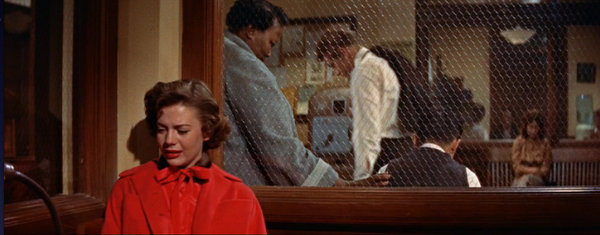
Throughout Rebel Without a Cause there is a deliberate use of costume to suggest delinquency as well as further perpetuating the gap (or sometimes lack of) between the world’s of teenagers and adults. Throughout the film, leather and ‘bomber’ jackets are used to symbolise rebellion from mainstream society, just as the colour red is also given associations with delinquency. In Juvenile Hall Judy is wearing a bright red coat and red lipstick (the same colour as the jacket that Jim wears to the ‘Chickie Run’), suggesting both her delinquency as well as conveying her sense of loss and need for belonging. Conversely Jim is dressed in a shirt and tie, not typical of 1950’s youth; instead the conservative clothes make him look like a dad himself. This establishes Jim as an outsider, not just through his delinquency, which is further reinforced once he goes to school the next day. His dad dresses in a shirt and tie similar to Jim in various other stages of the film. This again is much like the juxtaposition between the toy monkey and the alcohol, alluding to Jim’s growing frustration and confusion about his place in society.

Nicolas Ray’s camera in this sequence and in the wider film is often unobtrusive, but his framing is frequently subjective. In Juvenile Hall, by using the windowed walls, Ray has on different occasions framed the teenagers in such a way that has all three appear in the same shot. By doing so “[Ray] is able to visually establish the bond that unities all of America’s troubled, troublesome, alienated middle-class teenagers, who, with little variation, are mirror images of one another” (Peary, 282). The idea of windows as mirrors is furthered later in the film. Firstly when Jim spies Judy on the street before his first day at school he is looking through a window. At the mansion, Plato and Jim speak through a broken glass door. More knowingly perhaps is the use of windows at the ‘Chickie run’ where Jim and Buzz are both sitting in their parallel cars, looking at one another. Jim sees through his window everything he wants to be, Buzz as the popular teenager who has Judy as his girlfriend. This scene is poignant, as by the end of the film Buzz and Jim have switched roles and the mirror image is realised. Through using windows, in scenes such as in Juvenile Hall where the three teenagers are introduced, Ray captures the bond that ties American’s youth. Through this Ray suggests not only the unabridged similarities that tie them together, but also that “their differences…are not as strong as their common problems” (Peary, 283).

This sequence is indicative of the wider film. It combines a variety of techniques to contribute to the audience’s understanding of the division that exists between adults and teenagers as well as communicating the bond that ties youth together. These ideas are communicated through Ray’s framing, colour, costume, and blocking. Importantly this scene introduces the shared search for personal identity that ultimately unites the young characters in this narrative. This sets them on course towards reconciliation, but the brutality of Rebel Without a Cause is that it recongises that generational gap is so wide that some characters will never get a chance to find it.


Bibliography

Rebel Without a Cause (Nicholas Ray, US, 1955)

Ebert, Roger. ‘Rebel Without a Cause.’ The Great Movies II. Broadway Books: New York, 2005.

Peary, Danny. ‘Rebel Without a Cause.’ Cult Movies: The Classics, The Sleepers, The Weird and The Wonderful. New York: Dell, 1981. 282-285.

Shuker, Roy. ‘Hollywood’s Adolescents: Youth Film as Genre Study.’ Unknown. 41-47.